 Flow
Flow Focus
Focus Recover
 Variety Pack
The Sève community
Fuel smarter.
10% off your first order
Plus the Sève fuelling guide, straight to your inbox.
Members get first access to new formulas and the occasional drop

Sève Fuel Guide
Fuelthe work.
Evidence-based fuelling for running, riding, and racing. Build your gel-by-gel plan, then take it to the start line.
Why fuelling matters
Then the tank is empty.
Your body stores enough glycogen for about 90 minutes of hard effort. Beyond that, you're running on what you carry. This is the whole reason gels exist.
Steady blood glucoseExternal carbs keep energy level when stores run down.
Spared glycogenSave your stores for when the race actually starts.
No bonk, no fogPrevents the crash and the mental fatigue that comes with it.
Faster recoveryFuelled sessions cost less. You adapt instead of just surviving.
Source: PubMed 21660838, carbohydrate availability and endurance performance
Interactive
Build your race plan.
Pick your sport and your distance. Get the gel-by-gel plan, easy days to race day. Hover the dots.
The system
Three gels, three jobs.
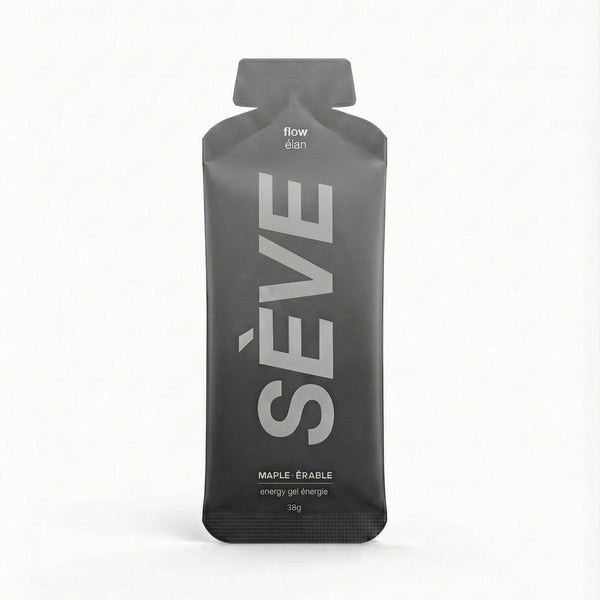
Flow
Your base gel
- When
- Steady-state efforts, easy long runs, throughout most of your race.
- Why
- 26g dual-pathway carbs, 190mg sodium, no caffeine. Clean energy without overstimulation.
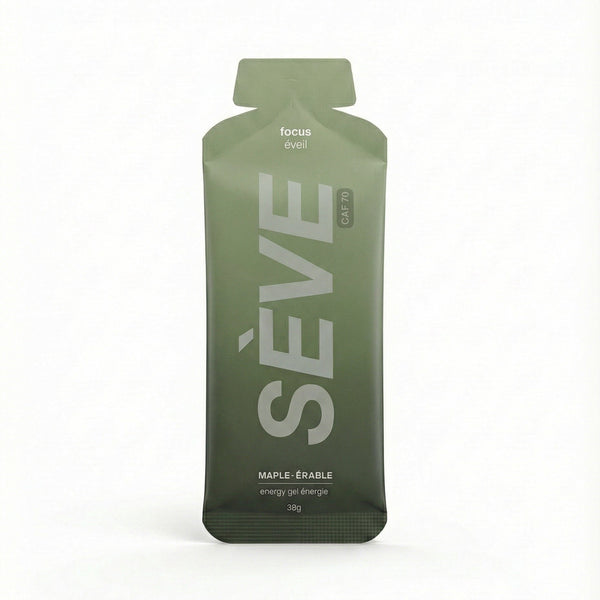
Focus
Energy boost
- When
- Tough climbs, late-race kilometres, or whenever fatigue sets in.
- Why
- Same base as Flow plus 70mg natural caffeine for lower perceived effort.
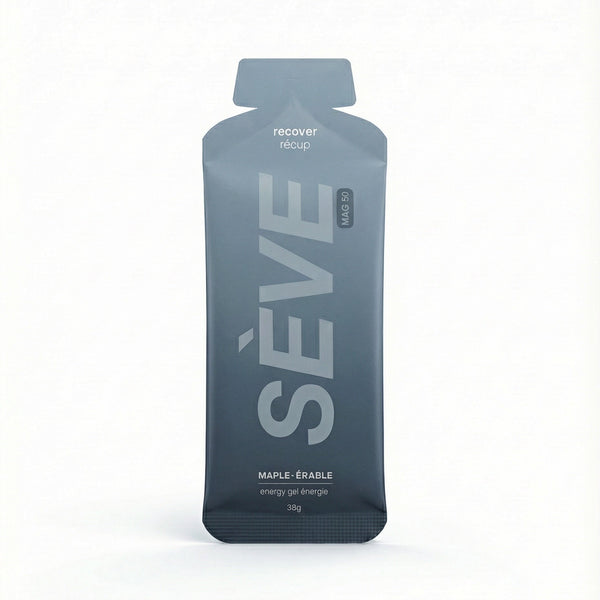
Recover
Recovery support
- When
- Recovery runs, easy sessions, and back-to-back training days.
- Why
- 50mg magnesium malate to support recovery during low-intensity efforts.
Don't overdo the caffeine.
Each Focus gel carries 70mg, roughly one cup of coffee. We kept it at 70mg instead of 100mg on purpose: Focus is built to be taken more than once across a session, so you get a steady, consistent dose instead of one or two big 100mg hits that spike your system and leave you crashing later. For a marathon, 2–3 Focus gels (140–210mg total) is ideal. Save Focus for:
- The final third of your race, when mental fatigue sets in
- Challenging terrain that demands concentration
Put it into practice
Fuel your next block.
The Variety Pack has all three formulas, enough to test your full race plan in training.